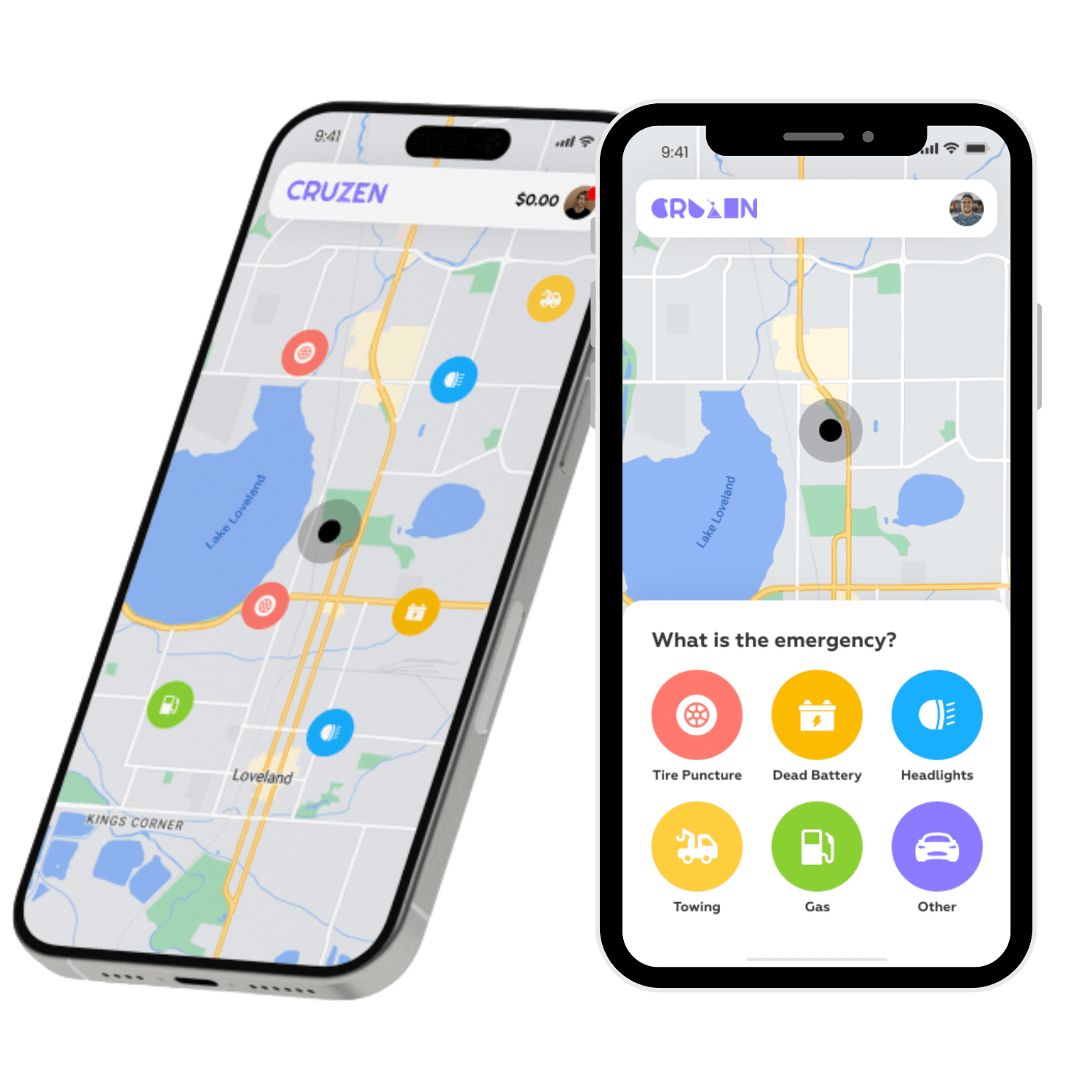
Fast, Reliable, At Your Doorstep Drive safer and smoother with the right tire pressure. CruZen provides quick checks and adjustments at your home, your workplace, or anywhere in Philadelphia. Certified mobile mechanics · Transparent pricing and clear service details · CruZen assigns the right mechanic for your vehicle Download the CruZen app to book tire pressure service in minutes.
CruZen goes beyond a quick air top-off, each service ensures your tires are safe, balanced, and road-ready.
PSI check with a calibrated gauge and adjustment to manufacturer's recommended levels (door-jamb placard).
Stranded with a dead battery? CruZen will get you back on the road fast with quick and reliable jump-start services.
Assessment of tire age/manufacture date to flag overdue replacements.
TPMS light check with sensor scan and relearn/reset if required.
Spare tire pressure check to ensure it's ready in emergencies.
Clear recommendations if a repair, rotation, alignment, or replacement is advised.
Getting your tire pressure checked and adjusted with CruZen is simple, quick, and stress-free. In just minutes, you can book a service and know exactly what's included.
Upfront pricing and clear scope of service
Assigned based on your vehicle type and service needs
Accurate before-and-after readings, plus expert recommendations for next steps
Members enjoy faster response times and discounted rates (plans start at just $7/month)
| CruZen Mobile Tire Pressure Check | DIY Tire Inflators | Traditional Shop Visits |
|---|---|---|
| Accurate PSI set with calibrated tools | Rely on gas station pumps or portable inflators, often inaccurate | Professional tools used, but quality depends on shop |
| Proper load/temperature adjustments and valve core torque | Often overlooked or done incorrectly | Usually adjusted, but not always explained to the customer |
| Systematic leak checks and TPMS diagnostics | Limited ability to detect slow leaks or TPMS issues | Leak checks possible, but may incur extra fees |
| Completed at your home, office, or roadside — no downtime | Requires time, effort, and frequent re-checking | Requires travel, wait times, and scheduling hassles |
Driver: Marcus, Center City commuter
Situation: Marcus woke up to a TPMS warning light on a freezing January morning (18°F). Overnight temps dropped his tire pressure from 35 PSI to 28 PSI—dangerously low. He needed to drive to a client meeting in King of Prussia but didn't want to risk a blowout on I-76.
Solution: He booked CruZen while drinking coffee. A mechanic arrived in 25 minutes, checked all four tires, inflated them to the correct cold-weather PSI, and reset the TPMS light. Marcus made his meeting on time with safe, properly inflated tires.
Driver: The Chen family, planning a trip to the Poconos
Situation: Before a weekend getaway, the Chens wanted their SUV's tire pressure checked and adjusted for highway driving with a fully loaded vehicle (kids, luggage, ski equipment). They didn't have a reliable gauge at home and didn't trust gas station air pumps.
Solution: They scheduled CruZen for Friday evening. The mechanic checked tire pressure, adjusted for the extra load (adding 3 PSI per door placard recommendations), checked the spare, and inspected tread depth. The family hit the road Saturday morning confident and safe.
Driver: Aisha, University City resident
Situation: Aisha noticed her car pulling to the right while driving on Kelly Drive. She suspected alignment issues but wasn't sure. A quick visual check showed one front tire looked softer than the others.
Solution: She booked CruZen for a pressure check at her UPenn parking spot. The mechanic found the right front tire at 22 PSI (should be 33 PSI) due to a slow leak from a nail. He inflated it temporarily, plugged the leak on-site, and balanced all four tires to spec. The pulling stopped immediately—no alignment needed.
Business: Green Delivery Co., five cargo vans
Situation: The company's insurance required documented monthly tire pressure checks for all vehicles. Driving five vans to a shop monthly was eating up delivery hours and costing revenue.
Solution: They set up recurring monthly CruZen appointments. A mechanic visits their Manayunk warehouse, checks and adjusts pressure on all five vans in 90 minutes, provides digital service records for insurance compliance, and the vans never leave the lot. Zero downtime, full compliance.
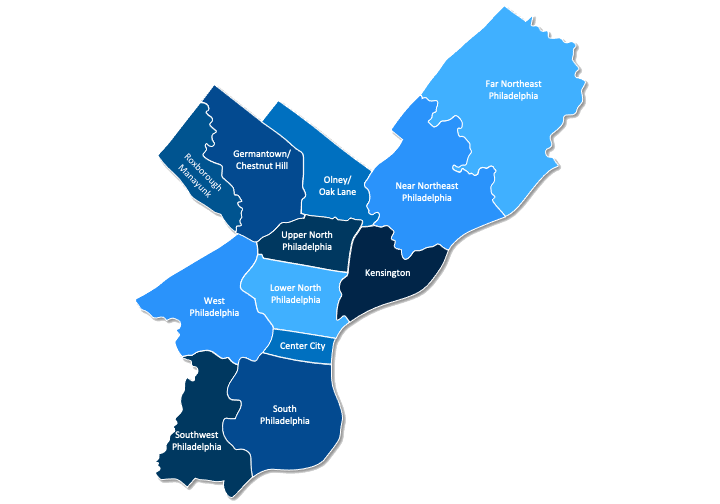
CruZen proudly offers car lockout service across Philadelphia and its surrounding areas, ensuring that help is always close by. Whether you're in bustling Center City, the vibrant neighborhoods of Fishtown and South Philly, or the nearby suburbs like Bala Cynwyd, Cherry Hill, and King of Prussia, we've got you covered. We serve up to a 50-mile radius from Center City, covering Philadelphia, the Main Line, South Jersey, and parts of Delaware. No matter where you are, our local network ensures you're never too far from assistance when you need it most.
Find answers to common questions about CruZen's services, how it works, and how we can help you get back on the road quickly and safely with our roadside service.
CruZen mechanics follow your vehicle manufacturer's recommended PSI, which is printed on a placard inside your driver's door jamb or in your owner's manual. The correct PSI varies by vehicle—typically 30-35 PSI for sedans, 32-40 PSI for SUVs, and 35-45 PSI for trucks. Never use the PSI printed on the tire sidewall; that's the tire's maximum capacity, not the recommended inflation pressure for your specific vehicle.
Yes. After adjusting your tire pressure to the correct levels, our mechanics can reset the TPMS system using a scan tool so your dashboard warning light goes off. On some vehicles, the light resets automatically after driving a few miles with proper pressure. If the light stays on after pressure adjustment, it may signal a faulty TPMS sensor—we'll diagnose and recommend next steps.
Absolutely. We include the spare tire in every service to make sure you're covered in case of an emergency. Most spare tires (especially compact "donut" spares) require higher pressure than regular tires—typically 60 PSI. We check and adjust your spare so it's ready to use when you need it most.
We recommend monthly checks, plus extra attention during seasonal temperature swings when pressure drops quickly. Philadelphia sees extreme temperature changes between summer (90°F+) and winter (teens or single digits), and tire pressure drops about 1 PSI for every 10°F temperature decrease. That means a tire at 35 PSI in July could drop to 28 PSI by January—dangerously low. Check pressure before road trips and whenever the TPMS light comes on.
Yes. Our mechanics inspect tires for slow leaks, valve stem problems, and punctures during every pressure check. We use soapy water or electronic leak detectors to find pinhole leaks, faulty valve cores, or bead leaks. Many slow leaks can be repaired on-site with a plug or patch (if the puncture is in the tread area and smaller than ¼ inch). Sidewall damage or valve stem replacements may require additional parts or follow-up service.
Persistent pressure loss usually means a slow leak from a nail, screw, or puncture; a leaky valve stem; or a damaged wheel bead seal. Our mechanics perform a thorough leak check using soapy water to locate the source of air loss. If it's a repairable puncture, we can plug or patch it on-site. If it's a damaged valve stem, we'll replace it. For bead seal leaks or sidewall damage, we'll recommend tire replacement.
Cold tire pressure is measured when the vehicle has been parked for at least three hours or driven less than a mile—this is when you should check and adjust pressure to the manufacturer's spec. Hot tire pressure (measured after driving) reads 2-5 PSI higher due to heat buildup from friction. Always inflate to the cold pressure recommendation, not the hot pressure reading, to avoid overinflation.
Yes. Your vehicle's door placard often lists different PSI recommendations for normal driving vs. maximum load or highway use. If you're towing a trailer, carrying heavy cargo, or planning a long highway trip, we'll adjust pressure according to those specs (typically adding 2-4 PSI). Proper load-adjusted pressure improves safety, handling, and fuel economy.
Absolutely. We visually inspect tread depth and wear patterns on all four tires during every pressure check. Uneven wear (like shoulder wear, center wear, or cupping) signals improper inflation, alignment issues, or suspension problems. We'll point out any concerns, measure tread depth with a gauge, and recommend rotation, alignment, or replacement if needed.
We'll inflate the tire to the correct pressure and assess whether it's safe to drive short distances (like to work or home). If the leak is slow and the tire holds air for several hours, you may be OK temporarily. For faster leaks or sidewall damage, we'll recommend not driving and offer on-site repair, spare tire installation, or help arranging a tow. Your safety is the priority—we won't send you off with a dangerous tire.
A standard four-tire pressure check and adjustment takes 20–30 minutes, including TPMS reset and visual inspection. If we're also checking for leaks, inspecting tread depth, or servicing the spare, add another 10-15 minutes. Most customers stay in their home or office while we work—you don't need to stand around watching.
Yes! Many CruZen customers set up recurring appointments—monthly for fleet vehicles, seasonally for personal cars (before winter and summer), or before long trips. You can schedule recurring visits through the app, and we'll send reminders when your next check is due. Drive+ members often bundle pressure checks with other routine maintenance like oil changes.
We're live in Philadelphia and the four surrounding counties today, with the Nationwide Program recruiting CruZers and signing Drive+ members in all 50 states ahead of launch. Check coverage for your city at /nationwide#coverage-map — and if you're a driver or mechanic, become a CruZer at /cruzers to help launch your local market.